Two Classical Materials, One Sculpture: A New Direction for the Horse Sculpture Series
For some time, I had been thinking about what it would mean to bring marble and bronze together in a single work – not as separate elements on a plinth, but genuinely combined, each material making a claim on the other, yet coalescing in unique and contemporary ways.
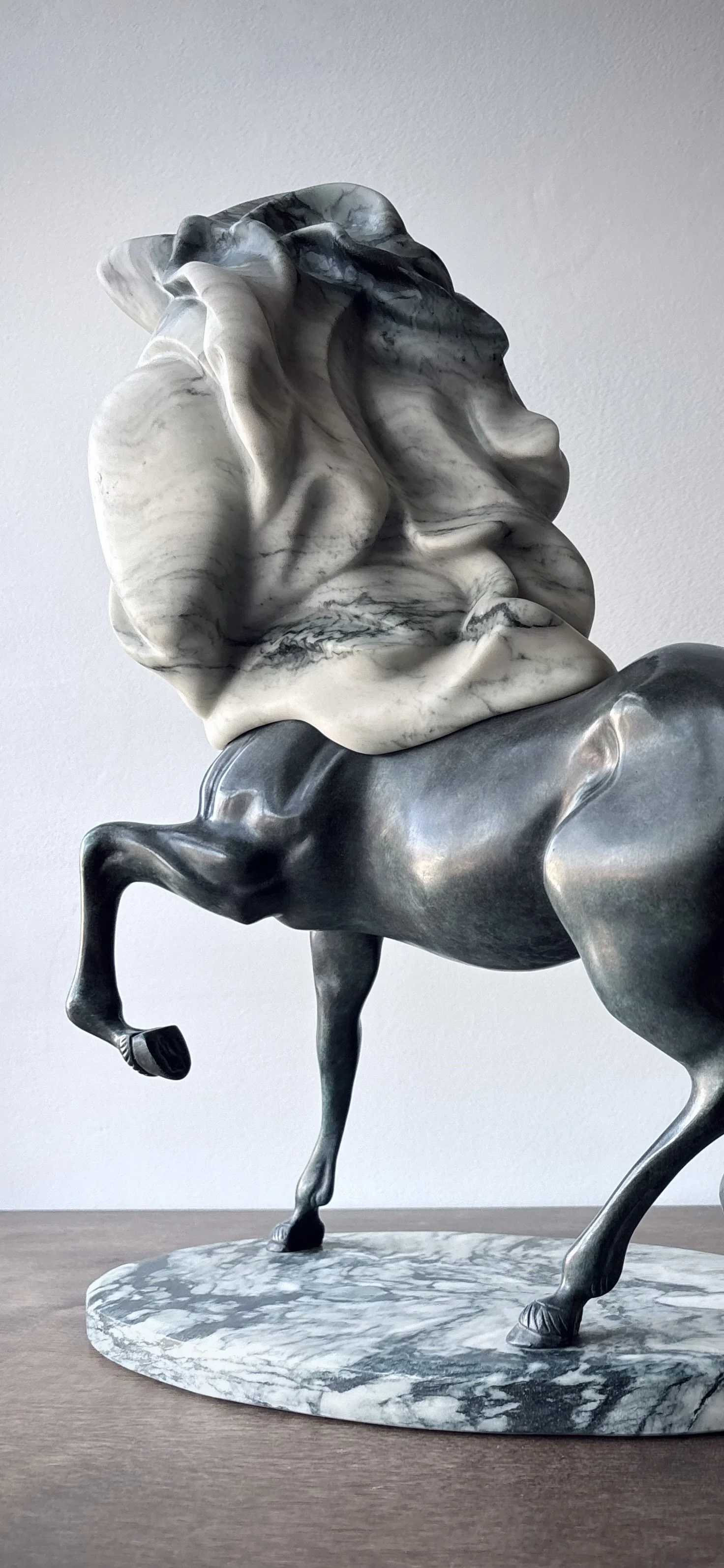
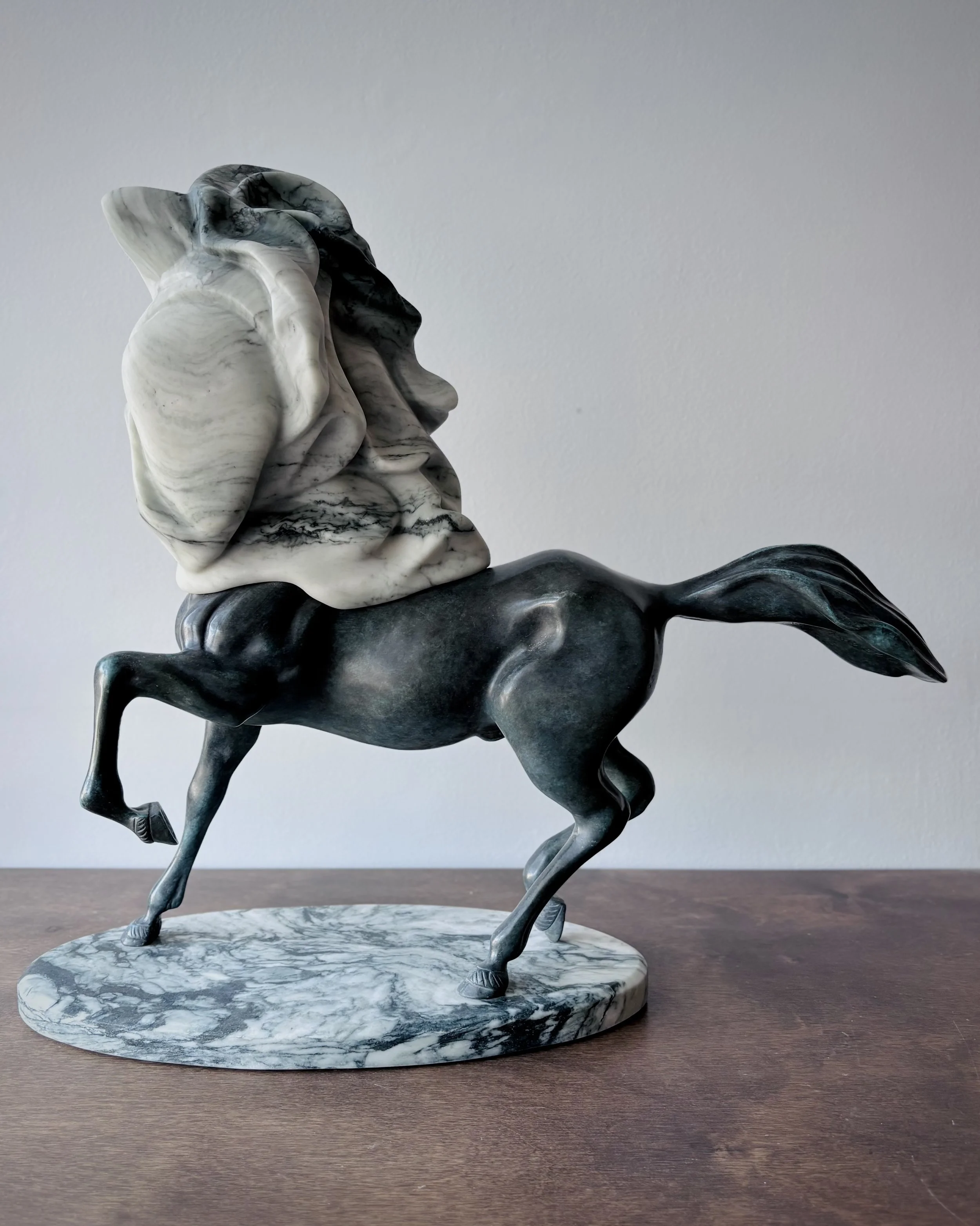
The horse series has always been about a contradiction of sorts: the heraldic surrender, made intimate, the heroic draped, ambiguous yet compelling in a new way. Creating these new material and conceptual tensions felt like the next natural progression. The cipollino marble I found for the first version – with its deep green and grey waves – suggested something tempestuous, yet resistant, like the spirit of the horse, re-emerging triumphant with the emotive power of a wild Irish sea.
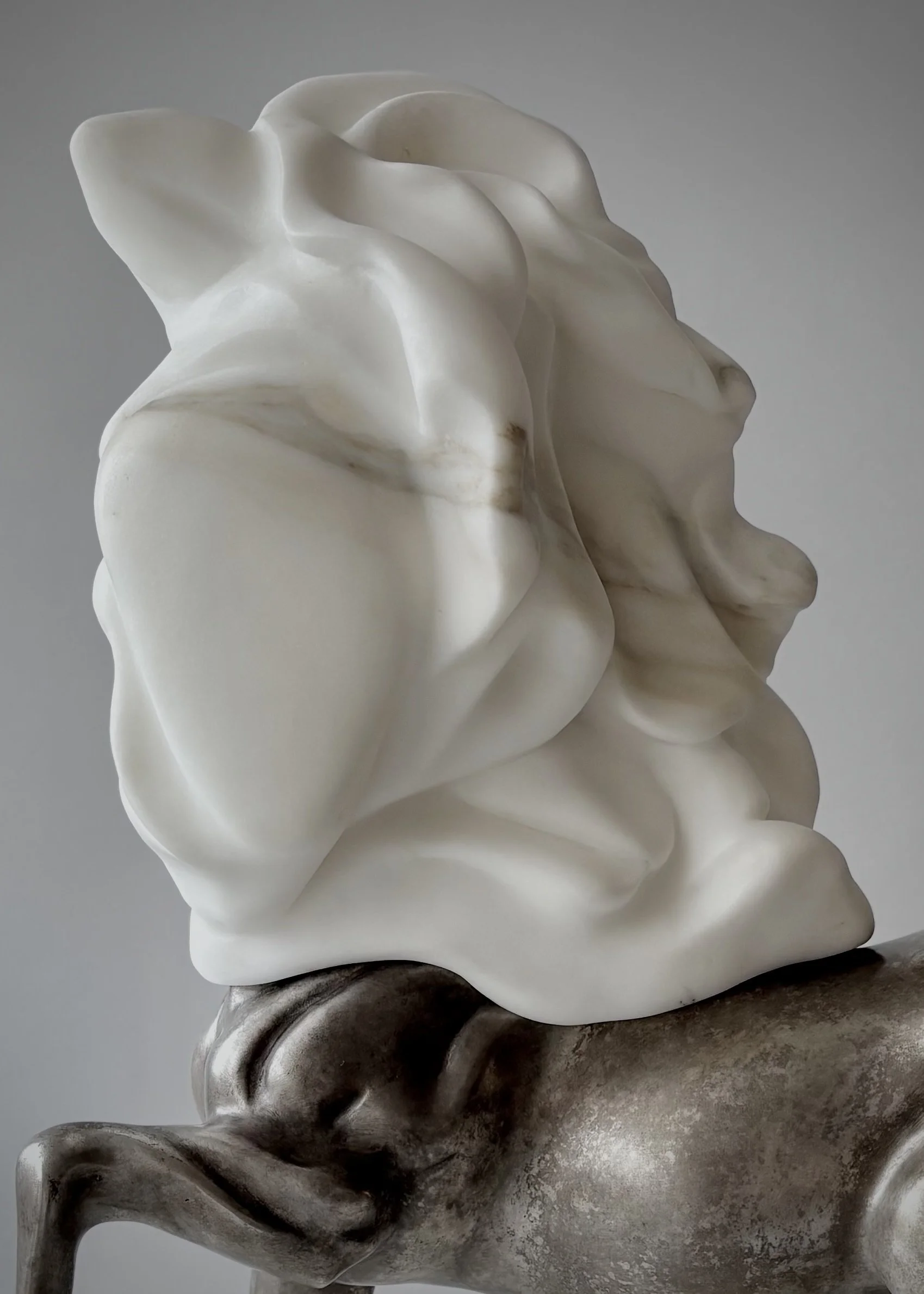
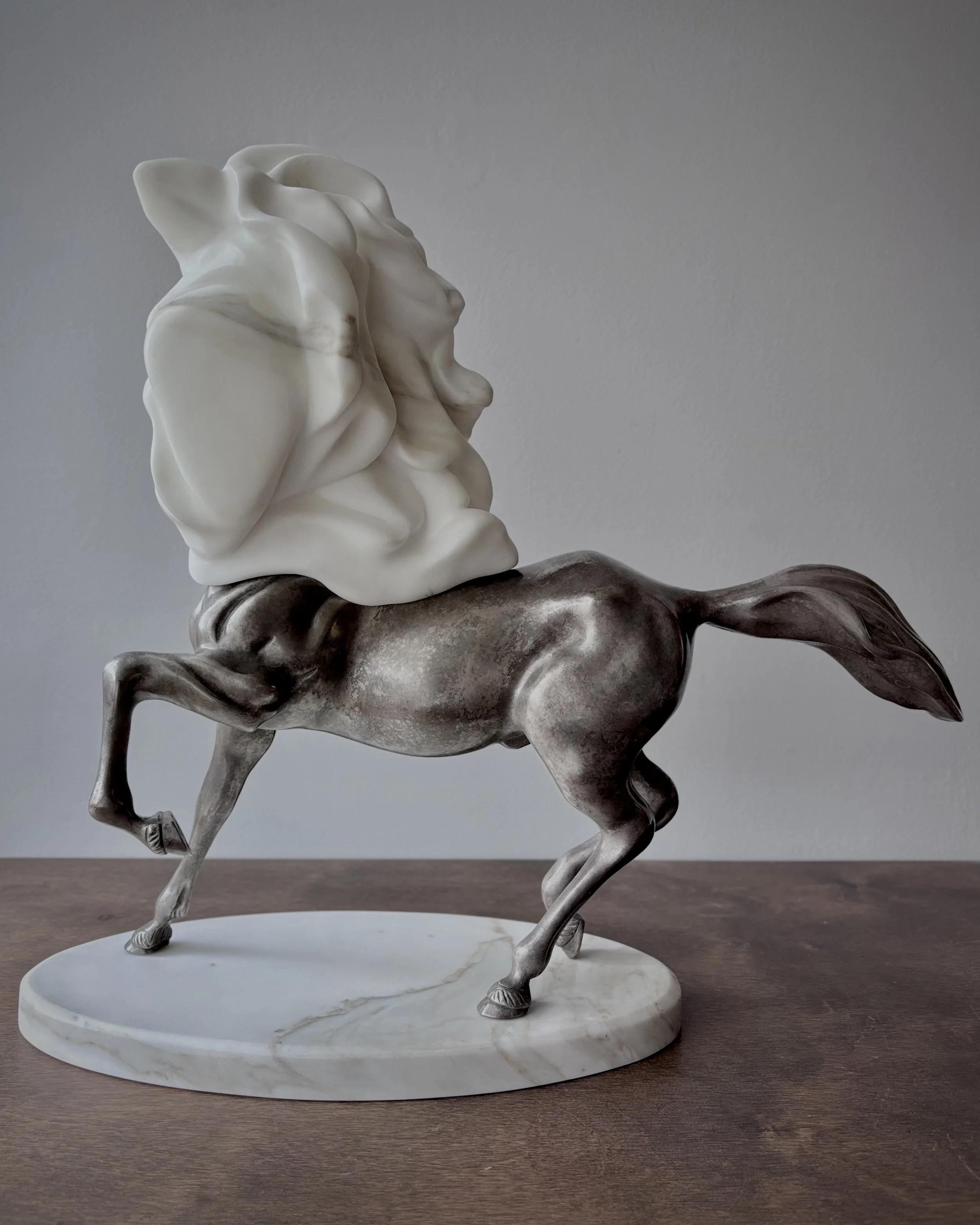
In the second version, I used calacatta marble, to nod to my marble flags series. Except here, that crystalline white is torn through with a grey and ochre streak. It’s envisaged as a battle scar. A trophy perhaps, a symbol of resistance certainly. But with that, a sense of surrender, to shadows of conflict, a tension of opposites.
For me, the complimentary patina brings a similar essence of time and transcendence, with its rich armour hues beneath. The patina also draws reference to Henry Moore’s lead and bronze ‘helmet heads’ created between 1939-40. A silver nitrate patina was often used too in the works of Louise Bourgeoise, imbuing another historical layer.
Each piece in the suite will combine a different marble with a different patina, so that no version or conversation between the materials are the same. The series is limited to six distinct versions. The process of selecting the marble itself is part of the making: you cannot completely plan for which marble will be used next until you seek it out and find it in Pietrasanta, Italy, seeing it a new light.